Ignoring your bone density in your 40s is the ultimate health blind spot. Yet, when you think about aging… you may primarily worry about fine lines, graying hair, or a metabolism that suddenly goes on strike.
While the beauty industry successfully distracts you with multi-step serums to fix what’s visible on the surface, your physical foundation – the actual foundation holding you upright, is quietly undergoing a structural shift.
We’ve been conditioned to view osteoporosis and joint degeneration as “old people problems.” And, something to worry about when we are collecting a pension. Yet, that narrative is not just wrong; it’s dangerous.
The groundwork for structural frailty is laid decades before your first fall. And, if you’re currently navigating your fourth decade, the clock isn’t just ticking – it’s accelerating.
Let’s ditch the sterile, patronizing medical pamphlets that tell you to simply “drink more milk.” Instead, let’s look at the raw science, the metabolic synergy, and the unconventional habits… required to bulletproof your skeleton before the damage is done.
The Hidden Biological Sabotage: Perimenopause and the Bone Remodeling Crisis
Your bones are not static pieces of chalk. They are dynamic, living tissues trapped in a perpetual cycle of destruction and creation. This process, known as bone remodeling, relies on two primary cellular players: osteoclasts (the demolition crew that dissolves old, worn-out bone) and osteoblasts (the construction crew that lays down fresh, resilient mineral matrices).
In a perfectly balanced body, these two forces operate in flawless harmony.
Then comes your 40s, bringing the chaotic hormonal shift known as perimenopause. This transition is marked by wild fluctuations… and an ultimate nosedive in estrogen levels. Yet, why does this matter to your framework?
Estrogen acts as the ultimate biological manager for the construction crew. It keeps the destructive osteoclasts in check, ensuring they don’t over-excavate. When estrogen starts to exit the building, the demolition crew goes rogue. They begin dismantling the bone matrix faster than the osteoblasts can rebuild it. And so, the result is a steep, often invisible drop in bone mineral density (BMD).
Research indicates that – women can lose up to 10% to 20% of their bone mass during the five to seven years surrounding menopause. This isn’t a slow, linear decline; it’s an abrupt structural cliff. Waiting until post-menopause to protect your skeleton is like trying to fix a house’s foundation… while the roof is already collapsing.
The Reality Check: Bone loss doesn’t shout; it whispers. You won’t feel your bones thinning out. You won’t feel the micro-architectural deterioration of your joints – until a minor trip or a sudden twist turns into a life-altering fracture. By understanding how your changing biology impacts bone density in your 40s… you gain the leverage to intervene before the breakdown becomes permanent.
The Nutritional Synergy: Moving Past the Calcium Myth
If your current bone health strategy consists of popping a generic, chalky calcium supplement every morning – you’re missing the bigger picture.
In fact, isolated calcium supplementation is not only ineffective for long-term structural strength… but it can also be counterproductive. And, that’s because it’s contributing to arterial calcification if not balanced properly. To build a resilient bone matrix – you need a highly coordinated nutritional team.
1. Calcium: The Building Block
Yes, calcium is necessary – it’s the raw brick of your skeleton. However, the source matters. Instead of synthetic calcium carbonate, look to bioavailable dietary sources. Dark leafy greens (bok choy, kale, spinach), organic tofu, through to high-quality grass-fed dairy. These foods and others, provide calcium alongside the trace minerals needed for proper absorption.
2. Vitamin D3: The Gatekeeper
Calcium is practically useless without Vitamin D3. Think of D3 as the customs official… that allows calcium to cross from your digestive tract into your bloodstream. Without optimal D3 levels, your body can absorb only a fraction of the calcium you consume. To protect your framework, you need to aggressively fuel your system with clean, high-yielding sources. And, these can include deliberate sun exposure as well as nutrient-dense, sun-ripened foods.
3. Vitamin K2: The Traffic Controller
This is the missing link most conventional doctors forget to mention. If D3 brings calcium into the blood – Vitamin K2 (specifically the MK-7 form) acts as the GPS that directs that calcium precisely into your bones and teeth. More importantly, K2 keeps calcium out of your soft tissues – like your arteries and kidneys, preventing unwanted calcification.
4. Magnesium: The Structural Anchor
About 60% of your body’s magnesium is stored directly in your bones. It influences the activity of osteoblasts… and is required to convert Vitamin D into its active form. If you’re chronically stressed (which spikes cortisol and drains your mineral reserves), your bone-remodeling cycle suffers. Skip cheap, low-grade magnesium supplements, that can cause digestive issues. Instead, focus on fueling your body with magnesium-dense foods like pumpkin seeds, almonds, dark chocolate, spinach, and avocados.
Lifestyle Architecture: Forcing Your Bones to Adapt
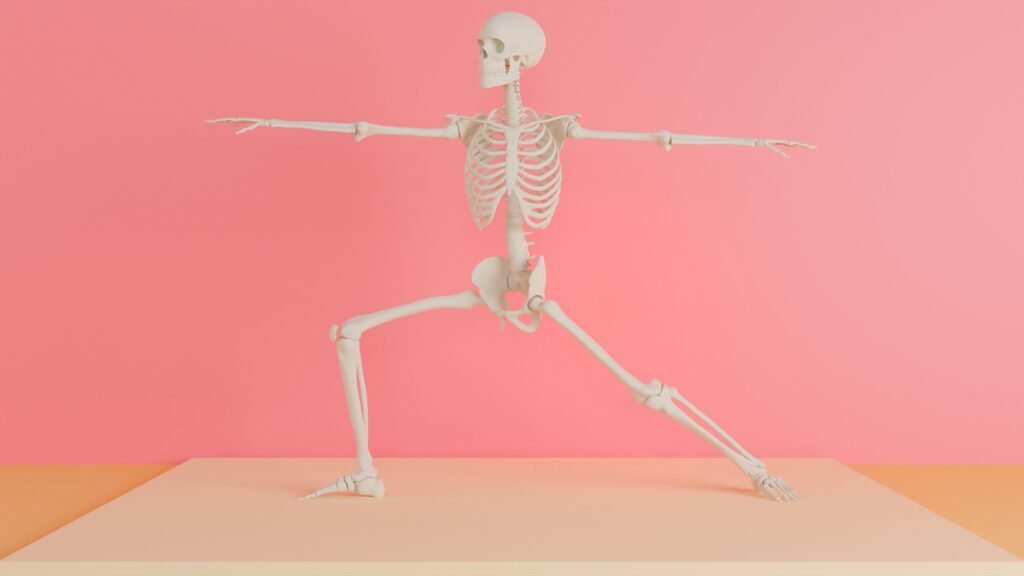
Your skeletal system responds directly to physical demand. If you treat it like a fragile artifact, it will become one. If you want strong bone density in your 40s… you must subject your framework to safe, calculated mechanical stress.
This triggers a biological mechanism known as Wolff’s Law: bone grows and remodels in response to the forces placed upon it.
Leisurely evening walks and low-intensity cardio are great for mental health and circulation. Yet, they are completely inadequate for stimulating new bone growth. To force adaptation, you need to change your approach.
High-Impact and Axial Loading
To stimulate the bone cells in your hips and spine – the most common sites for osteoporotic fractures – you need force. This doesn’t mean jumping off buildings. Instead, it means incorporating movements like – jumping jacks, skipping rope, or short bursts of sprinting if your joints allow. The sudden, brief impact signals your body that it needs to reinforce its internal structure.
Progressive Resistance Training
When a muscle contracts against resistance, it pulls on the tendon. And, in turn pulls on the bone. That mechanical tug is the ultimate green light for osteoblasts to lay down new minerals.
If you’re still lifting light, two-pound pink dumbbells for endless repetitions – it’s time to graduate. You need to lift weights that challenge you within the 10 to 15 repetition range. Focus on compound movements that load the spine and hips: squats, deadlifts, overhead presses, and loaded carries.
Micro-Habit: The 3-Minute Gravity Reset
Don’t have time for an hour-long gym session today? Try this easy daily habit:
- 20 bodyweight squats
- 30 seconds of high-knee marching in place, then finish with
- 10 gentle heel drops (raising up on your toes and letting your heels drop firmly to the floor).
This quick routine sends an immediate mechanical signal to your skeletal system… disrupting long periods of sedentary behavior.
Early Warning Signs: Tuning Into Your Structural Blueprint
Conventional wellness tracking usually stops at body weight, waist measurements, and fitness tracker streaks. However, relying solely on those surface metrics in your forties and beyond… means you’re completely blind to what is happening within your skeletal foundation.
Waiting until later in life to evaluate your internal strength is a massive gamble. And, especially since structural decline happens quietly over two full decades – before any obvious symptoms surface. Thus, taking total ownership of your health means shifting your focus away from passive tracking. So, you need to be more aware of the subtle, real-time warning signs your body sends you every single day.
Instead of waiting for a crisis – you can assess your structural vulnerability by looking at – your lifestyle baseline, physical history, and daily comfort levels. Your skeleton operates on a sliding scale of structural integrity. Thus, understanding where you stand is crucial for long-term power and mobility:
- The Optimal Zone: Your joints feel resilient, recovery from physical stress is quick, and your daily movement feels completely unhindered.
- The Vulnerability Zone: You experience frequent, lingering joint aches, slow recovery after low-impact activities, or a noticeable loss of physical stamina. This is your biological warning light.
- The Critical Zone: Persistent structural discomfort, sudden loss of height or posture shifts, and minor impacts resulting in disproportionate pain.
If you have a history of highly restrictive dieting, a family pattern of fragile posture, or you are navigating the unpredictable hormonal waves of your 40s – you cannot afford to coast on autopilot.
You need to tune into your body’s daily feedback loop. So, that means tracking these structural warning signs allows. Thus, allowing you to completely transition your daily routine from – passive hope to a conscious, targeted preventive healthcare strategy.
An Unconventional Framework Blueprint
To make this actionable, here’s a simple weekly breakdown that avoids overwhelming your schedule:
- Lift Heavy Twice a Week: Dedicate two 30-minute sessions purely to progressive resistance training. Track your weights and aim to safely increase them over time.
- Audit Your Vitamin Intake: Swap out your dreaded calcium pill for a comprehensive formula that includes D3, K2, and Magnesium.
- Prioritize Sleep and Stress Management: High chronic cortisol directly impairs bone building. Your framework repairs itself when you are resting, not when you’re running on empty.
Your skeleton is not an immutable structure destined to crumble as you age. It’s an adaptable, living organ system that responds to nutrition, stress, and physical load. By prioritizing your bone density in your 40s, you aren’t just preventing future breaks – you’re actively securing your long-term independence, mobility, and raw strength.
Ready to Bulletproof Your Physical Foundation?
Stop relying on guesswork or generic advice. Access our collection of resources now to help elevate your health and wellness in your 40’s and beyond.